


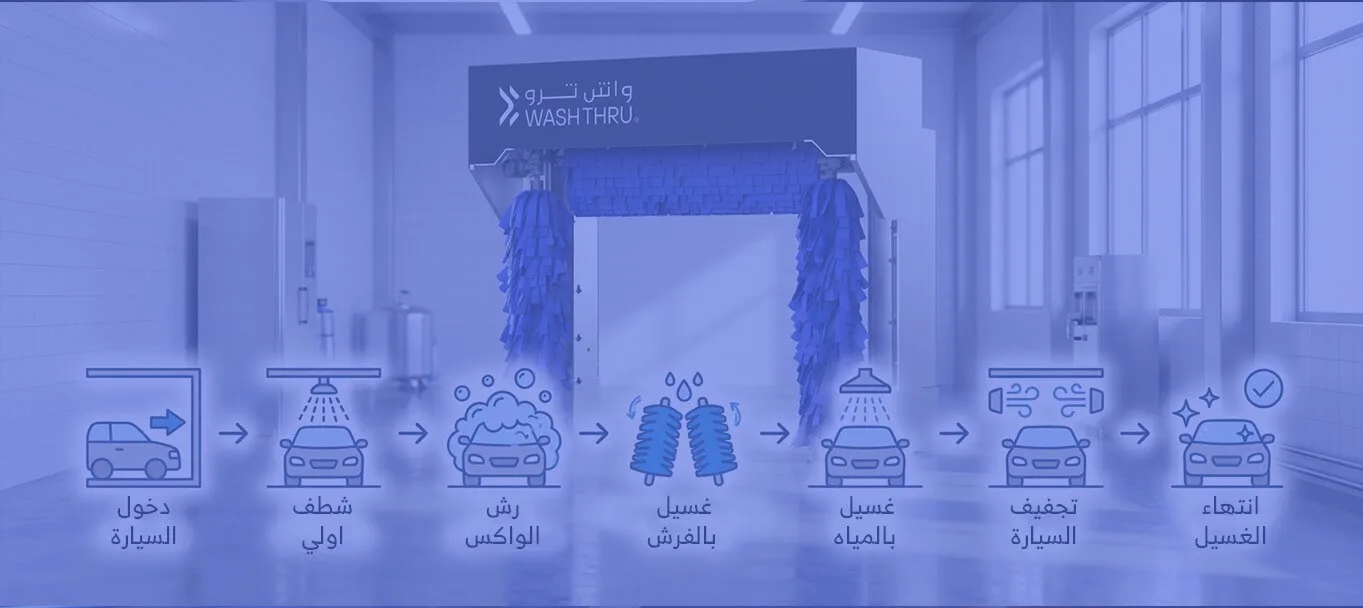
How Does an Automatic Car Wash Work, Step by Step?
Setting up an automatic car wash can look like a straightforward investment decision, but the real challenge starts after it goes live. Higher-than-expected water and electricity consumption, inconsistent wash results, complaints about spots or scratches, and unexpected breakdowns that cut into daily car volume — none of these problems come down to bad luck. They come down to choosing the wrong system, or not having enough technical understanding before buying.
Many investors focus on price and installation speed while overlooking details that directly affect profitability: actual throughput capacity, cycle time, drying efficiency, and long-term maintenance costs. Without careful technical analysis, a project ends up running under capacity or consuming more resources than it should — both of which hurt returns and long-term operational sustainability.
In this guide, we'll walk through how the systems work and the technical wash stages, so you can evaluate any system on clear operational grounds before making an investment decision.
What Is an Automatic Car Wash System?
An automatic car wash system is a fully integrated set of equipment — brushes, sprayers, and dryers — working in perfect coordination through a central control unit (PLC). The system relies on advanced sensors capable of reading a car's dimensions in three dimensions, allowing the arms and brushes to move around the vehicle's body at millimeter-precise distances to ensure thorough cleaning without any risky contact.
The Stages of an Automatic Car Wash, Step by Step
Inside WashThru systems, a car passes through a sequence of technical stages to guarantee a perfect result:
- Sensing and measurement: As soon as the car enters, infrared sensors determine its height, length, and width to tailor the arms' movement.
- Pre-soak: A special chemical mix is sprayed to break down trapped dirt and oils before the brushes engage.
- Chassis and wheel wash: High-pressure water jets clean the underside of the car and its tires to remove salt and mud.
- Main cleaning: Whether through gentle brushes or high water pressure (depending on the system), dirt is removed with precision.
- Final rinse and waxing: A layer of liquid wax is applied, acting as a protective seal for the paint and giving it a long-lasting shine.
- Smart drying: High-power air turbines effectively remove water droplets to prevent spotting.
Rollover vs. Tunnel vs. Touchless at WashThru
At WashThru, we offer every major global technology to fit your space and your budget:
- Rollover system: A rollover car wash is the most common system — the car stays stationary while the machine moves back and forth over it. Ideal for medium-sized spaces and fuel stations.
- Tunnel system: A tunnel car wash pulls the vehicle through a "tunnel" containing a series of wash stations. It offers enormous throughput — up to 60 cars per hour — making it the top choice for large-scale projects.
- Touchless system: Relies entirely on high water pressure and strong detergents, and is the preferred choice for luxury car owners who worry about brushes touching the paint. See the technical specification PDF for WashThru's touchless car wash system.
The Technical Factors That Determine a Wash's Efficiency
Your project's success depends on precise technical details built into our machines:
- Pump quality: The ability to sustain pumping without a drop in pressure.
- Control algorithms: How quickly sensors respond to avoid mirrors or protruding parts on the car.
- Water consumption: Systems that support water recycling to reduce costs.
- Nozzle layout: Spray angles that ensure detergents reach every part of the body.
Which System Fits Your Project?
Choosing a system depends on your own automatic car wash feasibility study:
- If you have a small space and medium traffic flow, a rollover system is your best fit.
- If you're targeting high operating density (such as major cities), a tunnel system is your winning investment.
- If your customer base owns luxury cars, adding a touchless option is essential.
Why Choose WashThru Systems?
Our systems combine technology with a strong return on investment:
- Full automation: Reduces reliance on human labor by more than 90%.
- Wash Cloud system: WashThru's smart Wash Cloud platform lets you monitor your project from your phone — track the number of cars washed, the volume of detergent used, and machine status in real time.
- Artificial intelligence: The machine can self-diagnose faults and send alerts before a problem occurs.
- A two-year component warranty and core maintenance coverage against manufacturing defects and faults.
- After-sales technical support and routine maintenance delivered through multiple channels, including remote consultations, operating-data analysis, and equipment performance reports.
- Permanent availability of essential and consumable spare parts, orderable directly through the system without needing direct contact.
- Equipment history management and smart alerts that calculate parts' expected lifespan and issue alerts before they expire, reducing sudden breakdowns and increasing operational reliability.
- Advanced support services including instructional videos for routine maintenance, augmented-reality video call support, and API integration with operating partners' management systems.
Related articles
Licensing Requirements for an Automatic Car Wash Project — A Complete Guide
Technical FAQ
Still have questions? Here are the most common questions people ask, along with answers:
1. Does an automatic car wash scratch the paint?
Modern systems use soft-fiber brushes designed to minimize friction, along with sensors that precisely control distance. In a touchless system, there's no mechanical contact at all — cleaning relies solely on water pressure and detergents.
2. How many cars can be washed per hour?
It depends on the type of system and the wash program selected. Rollover systems typically handle 10 to 20 cars per hour depending on the chosen cycle, while tunnel systems can reach 60 cars per hour or more, depending on design and operating density.
3. What's the average water and electricity consumption?
Consumption is tied to operating pressure, cycle duration, and whether a water-recycling system is in place. Systems equipped with water recycling significantly reduce water consumption, while high-efficiency pumps help lower energy use.
4. Does an automatic car wash need a large workforce?
Fully automated systems significantly reduce reliance on labor, with the human role usually limited to general supervision or directing cars — lowering operating costs compared with manual car washes.
5. What's the expected operating lifespan of the wash?
With regular maintenance and genuine spare parts, these systems can run reliably for many years. Operational sustainability depends on component quality, programming precision, and adherence to the preventive maintenance schedule.
Planning to launch an automatic car wash project and looking for a decision based on technical analysis rather than general estimates? The WashThru team offers a preliminary operational study covering site evaluation, daily capacity estimates, and identifying the right system in terms of space, budget, and expected return.
Contact us for a free preliminary technical consultation and to determine the optimal solution for your project.
Related Articles
Touchless Car Wash: A Profitable Investment That Attracts Higher-Value Customers
An investor's guide to opening a touchless car wash: how to increase revenue, target higher-value customers, and build a profitable car wash business with modern technology.
RF-V1 Touchless Automatic Car Wash Machine
Discover the RF-V1 touchless automatic car wash machine, delivering fast performance and smart technology with low water consumption and maximum operating efficiency.
RCV-V1 Touchless Automatic Car Wash Machine
Discover the RCV-V1 touchless automatic car wash machine, featuring an advanced exterior structure and greater vehicle capacity, high performance, and smart operating technology.
